
Why Classical Christian Micro-Schools Are Rising, and Why That Matters Now
In recent months, I’ve written about two educational influences that may seem worlds apart: Finland’s widely admired education system and the ancient discipline of Latin. Yet both point to a shared truth - education works best when it is relational, formative, and grounded in values that endure.
Finland reminds us that children flourish in trust-based environments where formation matters more than frenetic pace. Latin reminds us that disciplined thinking, perseverance, and attention to truth are formed slowly, especially in young learners.
Together, these insights lead naturally to another question many families and educators are now asking: What kind of school best supports this kind of education?
For a growing number, the answer is the Classical Christian micro-school.
What Is a Classical Christian Micro-School?
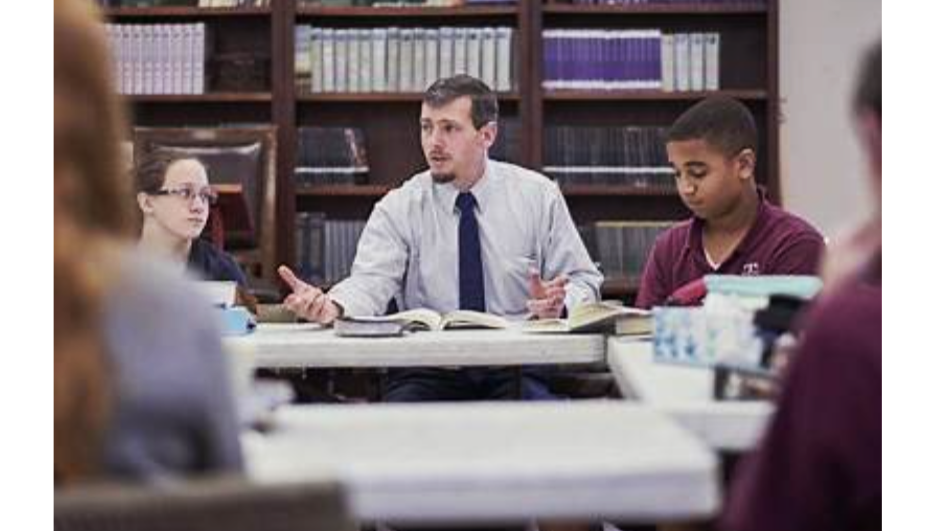
A Classical Christian micro-school is a small, mission-driven learning community—often serving anywhere from five to fifty students—rooted in a biblical worldview and the classical tradition. While “micro-school” is a modern label, the model itself is anything but new. For centuries, education was personal, relational, and guided by mentors rather than systems.
These schools typically feature:
Multi-age classrooms
Low student-to-teacher ratios
A classical curriculum grounded in the Trivium
Latin, literature, and biblical instruction
Intentional character and virtue formation
Some operate five days a week; others function as hybrid tutorials partnering closely with families. What unites them is not size, but purpose.
Why the Micro-School Model Works So Well for Classical Christian Education
Classical Christian education depends on dialogue, discipleship, and habit formation; things that are difficult to scale and easy to dilute. Micro-schools protect what matters most.
Formation over efficiency.
In small settings, teachers know their students deeply - their strengths, struggles, and hearts. This mirrors what we admired in Finland’s system: trust, autonomy, and human-centered learning. Education becomes less transactional and more transformational.
Developmentally wise learning.
Multi-age classrooms allow younger students to rise and older students to lead. This is especially effective in the grammar stage (K–3), where imitation, repetition, and modeling are powerful tools. Young children don’t just learn content; they absorb habits, language, and virtue.
Character is caught as much as taught.
In a micro-school, character formation is unavoidable. Students observe how adults handle challenge, correction, perseverance, and joy. This environment naturally cultivates qualities you’ve seen woven through these articles: SISU-like perseverance, humility, courage, and moral clarity.
Why Latin Thrives in the Micro-School Model
As I explored in a previous article, Latin is uniquely formative, but it is also uniquely relational. It requires conversation, correction, and careful attention. These are difficult to sustain in large, impersonal systems, but they flourish in micro-schools.
In small classrooms, teachers can ensure students truly understand why endings matter, how meaning is determined, and what disciplined thinking looks like in practice. Latin becomes more than a subject—it becomes a daily exercise in perseverance, humility, and critical thinking.
This is especially powerful in the early years. When young students chant Latin together, practice structure, and experience mastery, they are not simply learning a language; they are forming habits of mind. In an age of AI-generated answers, Latin trains students to slow down, analyze carefully, and think independently.
Micro-Schools and the Age of AI
As I’ve explored in Character Matters, the defining leadership question of our time is not whether AI will advance; it will, but whether we will lead it wisely or be led by it. That requires discernment, judgment, and character formed long before technology enters the classroom.
Micro-schools are uniquely positioned for this moment. Small classrooms foster discussion rather than passive consumption. Students are trained to reason, articulate, question, and listen. Combined with classical tools like Latin—which resist shortcuts and reward careful thinking—students develop intellectual independence.
In the Age of AI, this kind of formation is not optional. It is leadership preparation.
Are There Really Classical Christian Micro-Schools?
Yes, and many of today’s strongest Classical Christian schools began exactly this way.
Across the country, there are:
Classical Christian cottage schools meeting in homes or churches
Hybrid tutorials using curricula such as Memoria Press, Veritas Press, or Classical Academic Press
ACCS-aligned schools that intentionally remain small
Some grow over time. Others choose to stay small by design. Both paths can be faithful.
What matters is not scale, but clarity of mission.
Why This Matters for Christian Crossroads Academy
For Christian Crossroads Academy, the micro-school model is not a limitation; it is a strength.
It allows us to:
Launch intentionally with K–3
Prioritize character, faith, and thinking over test scores
Build deep partnerships with families
Protect a culture rooted in truth, virtue, and wisdom
At a time when many systems chase size, speed, and novelty, micro-schools offer something quietly countercultural: presence, purpose, and formation.
A Return to What Has Always Worked
The renewed interest in Classical Christian micro-schools is not a trend; it is a recovery. A return to education that sees children not as data points, but as souls in formation.
· Finland taught us that less can be more.
· Latin taught us that discipline forms discernment.
· Micro-schools remind us that education is ultimately relational.
In a rapidly changing world, that may be exactly what our children need most.
© Danita Bye. Worked with AI to enhance clarity and Hemingway for readability.
Danita Bye is a Leadership Futurist, Author, and Founding Board Member of Christian Crossroads Academy. She’s committed to restoring virtue-centered formation in education. Her work focuses on empowering leaders in an age of rapid technological change, where wisdom and discernment matter more than ever.
She partners with Christian leaders across education, business, and civic life who believe character ultimately determines impact. Danita serves on many boards in North Dakota and nationally that are focused on leadership and ethics. She is the author of Millennials Matter and the forthcoming Character Mandate, and a TEDx speaker passionate about forming leaders rooted in truth, courage, and faith.
Danita has a master’s in transformational leadership from Bethel University, MN. She currently lives near the TTT Ranch, in Stanley, North Dakota, where she grew up. She’s been married for 42 years and has six grandchildren.